Thursday, September 18, 2025

Saturday, September 6, 2025
Tuesday, September 2, 2025
Mythbusting: Vegetarian Chickens #freerangechickens #backyardchickens a...
Tuesday, August 26, 2025
Monday, August 18, 2025
Monday, June 23, 2025
Shhh... Meet the Quietest Chicken breeds
Hey there, future flock-keepers! If you’ve been day-dreaming about gathering breakfast in your pajamas without a 5 a.m. rooster-alarm, you’re in the right place. Today we’re talking about chickens that keep the decibels (and the neighbor complaints) to a minimum.
Wait — are any chickens truly “silent”?
Not exactly. All hens announce a fresh egg with a short “egg song,” and every bird mutters to her flockmates. But some breeds have naturally softer voices and calmer personalities, which keeps overall noise low.
Quick-look Cheat Sheet
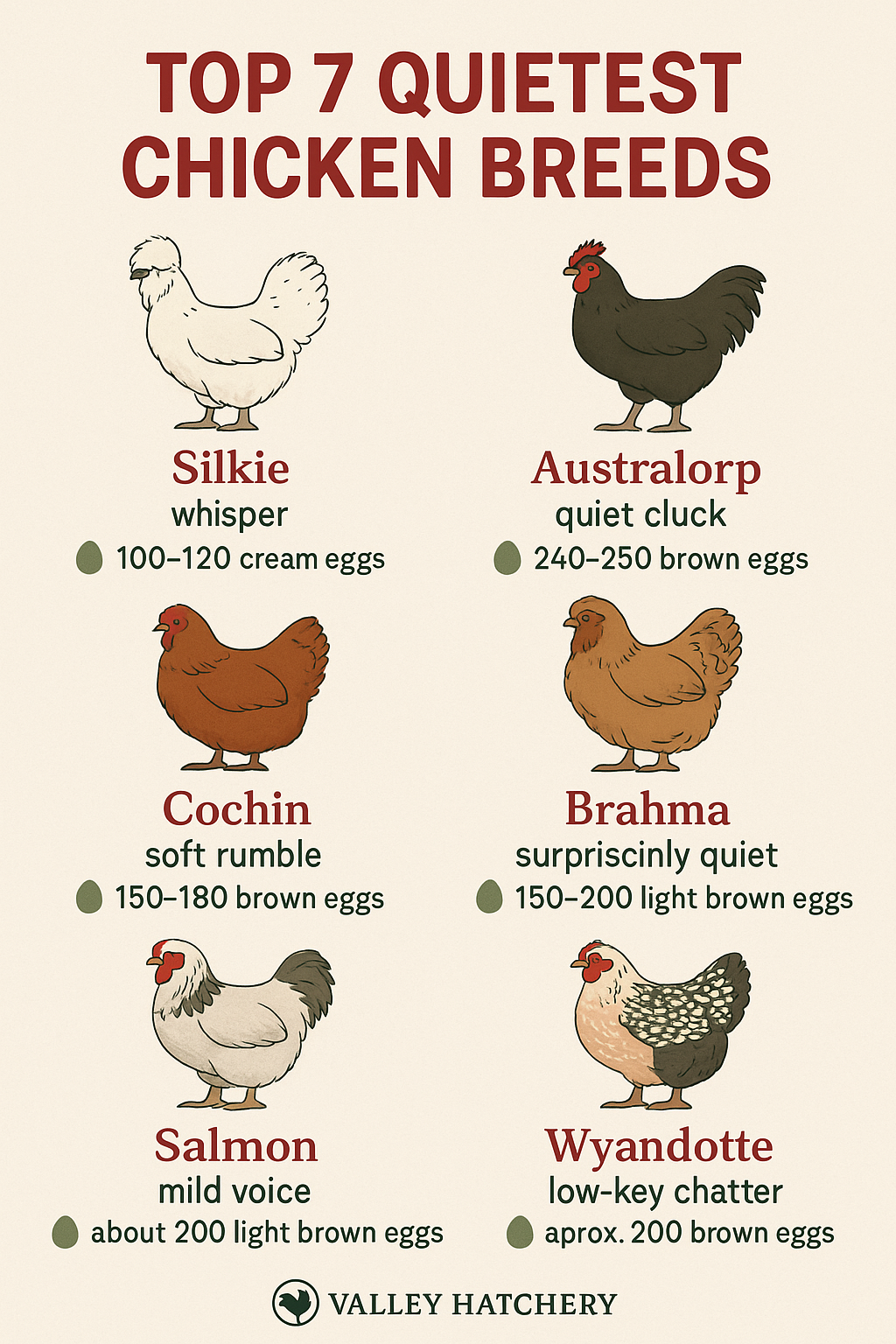
1. Silkie
Noise vibe: whisper-soft peeps
Eggs: 100-120 tiny cream gems/year
Fluffy, pint-sized, and practically a therapy chicken. Great for kids and small backyards, but don’t expect a flood of eggs.
2. Australorp
Noise vibe: gentle “quiet-cluck”
Eggs: 240-250 large browns/year
Australia’s record-setting layer delivers plenty of breakfast with very little drama.
3. Buff Orpington
Noise vibe: low chatter
Eggs: 180-200 browns/year
Often called the “golden retriever” of chickens—docile, friendly, and great with kids. Give them shade; that thick buff coat gets toasty.
4. Cochin
Noise vibe: soft rumble
Eggs: 150-180 browns/year
These feather-footed fluffballs waddle instead of sprint and prefer a calm coop. Heavy bodies mean sturdier roosts are a must.
5. Brahma
Noise vibe: surprisingly quiet giants
Eggs: 150-200 lights/year, even in winter
Their sheer size looks intimidating, but their voices are barely above a hum.
6. Salmon Faverolle
Noise vibe: mild, sweet voice
Eggs: about 200 light-tinted/year
Bearded, five-toed charmers that get along with everyone—just keep them busy so they don’t wander.
7. Wyandotte
Noise vibe: steady, low-key chatter
Eggs: ~200 browns/year
Hardy in cold climates thanks to their rose combs, and their laced feathers are pure eye-candy.
Perks and Tradeoffs of a Quieter Coop 


- Rooster optional. You don’t need a rooster for eggs, and he’s the loudest bird in the yard.
- Space matters. Crowded hens complain; shoot for 4 sq ft inside/10 sq ft outside per bird.
- Routine feeding. Empty feeders equal squawking. Set reminders or use an automatic feeder.
- Black-out curtains. Blocking dawn light means hens wake up with you, not before you.
- Boredom busters. Hanging cabbages, dust baths, and forage boxes keep clucks conversational, not cranky.
Here’s to fresh eggs without the ruckus! 

Thursday, April 18, 2024
The Top Three Benefits of Raising Guinea Fowl - And One Important Consideration
Raising guinea fowl can be an enriching experience, offering numerous benefits that go beyond the ordinary. These hardy, distinctive birds are often celebrated for their unique contributions to a farm or homestead. Let's explore the top three reasons to consider raising a flock of guinea fowl, along with one important caveat to keep in mind. Whether you’re an experienced farmer or a newcomer to poultry keeping, understanding these advantages and challenges can help you make an informed decision.

Pest Control
One of the most celebrated benefits of raising guinea fowl is their exceptional ability to control pests. Guineas are natural foragers, and they have a voracious appetite for insects. They can significantly reduce the population of ticks, fleas, and other pests in your yard without the need for chemical pesticides. This not only helps protect your garden and livestock from harmful bugs but also contributes to a more natural and sustainable farming practice.
Key Fact: Guineas can consume large quantities of insects each day, including ticks, which are known carriers of Lyme disease.
Alarm System
Guinea fowl are well-known for their loud and distinctive call. While their noisiness might be a drawback for some, it serves as an excellent natural alarm system. Guineas will vocalize loudly when they encounter anything unfamiliar or potentially threatening. This makes them great watchdogs for your property, alerting you to the presence of intruders—be they human or animal.
Security Tip: Their alertness to unusual activity makes them particularly useful in rural areas where properties can be sprawling and more difficult to monitor.
Low Maintenance
Compared to other poultry, guinea fowl are relatively low maintenance. They are hardy birds that can adapt to various climates and conditions. Once acclimated, they require less shelter and care than chickens and can fend for themselves by foraging for their food. This makes them an excellent choice for those who want to raise poultry but have limited time to dedicate to more needy species.
Sustainability Note: By foraging for their own food, guineas help reduce the cost of feed and minimize the labor involved in their upkeep.
Caveat: Noise Level
While the vocal nature of guinea fowl can be an advantage for security purposes, it is also important to consider it as a potential downside. Guineas are notably louder than other poultry, which can be an issue in urban or densely populated areas. Their calls can disturb neighbors, particularly in the early morning or late evening. Before deciding to raise guinea fowl, check local regulations regarding poultry and consider whether the noise might be problematic in your community.
Consideration: If noise is a concern, it may be worth looking into ways to keep your guineas quieter, such as providing more feed to reduce roaming and calling, or strategically planning their housing location.
It turns out that raising guinea fowl offers unique benefits, making them a worthwhile addition to many farms and homesteads. Their abilities as natural pest controllers, alert systems, and low-maintenance livestock can significantly enhance the productivity and safety of your property. However, it's important to weigh these advantages against the potential challenge of their noise level, especially in more populated areas. By considering all these factors, you can decide whether guinea fowl are right for your specific situation and enjoy the rewards of raising these fascinating birds.

-
 Hey there, future flock-keepers! If you’ve been day-dreaming about gathering breakfast in your pajamas without a 5 a.m. rooster-alarm, you...
 -
 When diving into the world of ordering day-old chicks online, it's the beginning of a virtual journey to building your feathered flock. ...
 -
Join us as we explain why "vegetarian chickens" are a modern myth. Those backyard chickens of yours will eat everything. That...
